
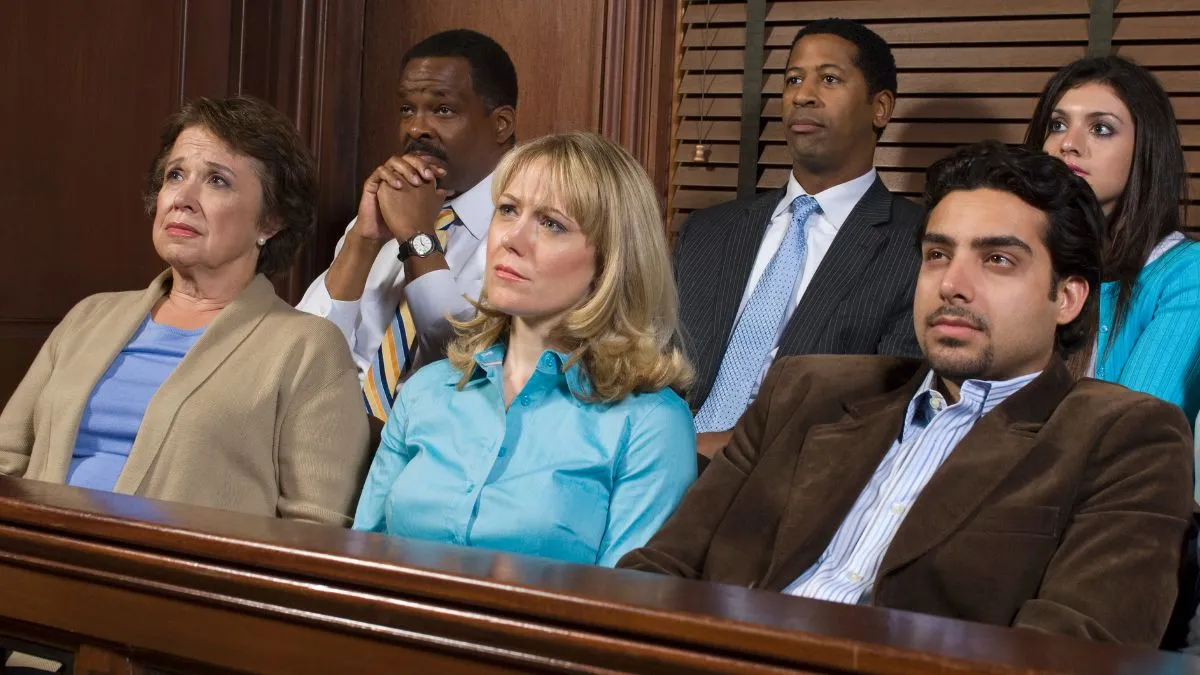

Want to get paid to be a mock juror? Yes? Here is the complete guide on how to make money being a mock juror and the reality of earning potential.
The idea of getting paid to be a mock juror might sound like something straight out of a courtroom drama, but it’s actually a legitimate side hustle that thousands of people participate in every year.
A mock juror is essentially a regular person who reviews legal cases before they go to trial and gives feedback to attorneys. Lawyers use these mock trials to test their arguments, identify weaknesses in their cases, and understand how real jurors might respond in court.
Think of it like a movie test screening. Before a film is released, producers show it to a small audience to see what works and what doesn’t. In the legal world, mock juries serve the same purpose.
Attorneys present summaries, evidence, and sometimes video arguments to a group of people who resemble the type of jurors that might appear in a real trial. Participants then provide opinions, verdicts, and reasoning behind their decisions.
What makes this opportunity interesting is that you don’t need to be a lawyer or have legal experience. In fact, the whole point is that you represent an average citizen. Lawyers want honest reactions from everyday people, not legal professionals who might overanalyze the case.
Mock juror work can take place in two main formats: in-person mock trials and online mock jury panels. While traditional mock trials used to happen mainly in conference rooms or legal offices, the internet has opened the door for remote participation. Today, many platforms allow people to review case summaries from home and submit their verdicts online.
Payments vary depending on the platform and case complexity, but some participants earn $20 to $150 per case. While it won’t replace a full-time job, it can be a fascinating and flexible way to make extra money while learning how legal strategies actually work behind the scenes.
For people who enjoy analyzing situations, debating arguments, and forming opinions based on evidence, becoming a paid mock juror can feel less like work and more like participating in a real-life courtroom mystery.
Table of Contents
Understanding the Role of a Mock Jury in Legal Trials
A mock jury plays an important role in the legal preparation process. Before a case ever reaches an official courtroom, attorneys often want to know how a group of ordinary people might react to their arguments. This is where mock jurors step in. They review evidence, examine the facts presented by both sides, and ultimately deliver a verdict or opinion. The feedback they provide helps lawyers refine their strategies before the actual trial begins.
Imagine a lawyer preparing for a high-stakes personal injury lawsuit worth millions of dollars. Winning or losing may depend on how convincing their argument is to jurors. Instead of waiting until the real trial to find out whether the argument works, attorneys run practice trials using mock juries. Participants listen to case summaries, watch presentations, and then deliberate just like real jurors would. Their responses reveal which arguments resonate and which ones fall flat.
According to the American Bar Association, mock trials and jury simulations are commonly used in complex cases, especially those involving corporate disputes, medical malpractice, or major accidents. These cases often involve huge financial risks, so lawyers want to minimize surprises when the trial begins.
Mock jurors might be asked to do several tasks during a session. These can include reviewing witness statements, examining evidence summaries, answering questionnaires, or discussing how they would vote in a real trial. Sometimes participants even rate the credibility of witnesses or determine how much compensation should be awarded.
One fascinating aspect of mock jury work is that attorneys often analyze the reasoning behind juror decisions more than the decisions themselves. For example, if most mock jurors believe a witness appears untrustworthy, lawyers may reconsider how that witness will be presented in court. If the defense argument confuses participants, attorneys may simplify their messaging.
In other words, mock jurors provide the legal equivalent of market research for court cases. Just as companies test products before launching them, lawyers test legal arguments before presenting them to a real jury.
For participants, this process offers a unique behind-the-scenes look at the justice system. Many people find it surprisingly engaging because they get to evaluate real legal disputes, weigh evidence, and see how legal strategies are developed long before the courtroom doors open.
Why Lawyers Use Mock Jurors Before Real Trials
Legal trials can be unpredictable. Even the most experienced attorneys cannot fully anticipate how a jury will react to certain evidence, emotional testimony, or complex legal arguments. This uncertainty is exactly why lawyers rely on mock jurors before entering the courtroom. By testing their cases with ordinary people in advance, attorneys gain valuable insights that can dramatically influence the outcome of a trial.
One of the biggest reasons lawyers conduct mock trials is to identify weaknesses in their case. During a real trial, there is little room for experimentation. If an argument fails to convince jurors, it may be too late to adjust the strategy. Mock juries allow attorneys to see which parts of their case confuse or frustrate people. If several mock jurors misunderstand a key point, that signals the need to clarify the explanation before presenting it in court.
Another major benefit involves evaluating juror psychology. Trials are not decided purely by facts; emotions, credibility, and perception play huge roles. For example, a lawyer might discover that jurors sympathize strongly with an injured plaintiff or distrust a corporate defendant. These reactions help attorneys adjust their tone, storytelling approach, and presentation style.
Mock juries also help lawyers determine how much money a jury might award in damages. In personal injury or malpractice cases, predicting jury awards is incredibly difficult. By observing how mock jurors respond to evidence of harm or negligence, attorneys can estimate potential compensation ranges. This information is especially useful during settlement negotiations.
There is also a strategic advantage when preparing for opposing arguments. Lawyers often present both sides of a case to mock jurors to see how participants react to each narrative. If the opposing argument appears stronger than expected, attorneys may shift their strategy or gather additional evidence before trial.
Technology has further expanded the use of mock juries. Online platforms now allow lawyers to gather feedback from diverse groups of participants across different demographics, making results more representative of real juries. Instead of relying on a small local group, attorneys can analyze opinions from dozens or even hundreds of mock jurors.
From the lawyer’s perspective, the cost of running mock jury sessions is small compared to the potential financial consequences of losing a case. For participants, however, it creates an unusual opportunity: getting paid to evaluate legal cases from home.
How Mock Juror Programs Work
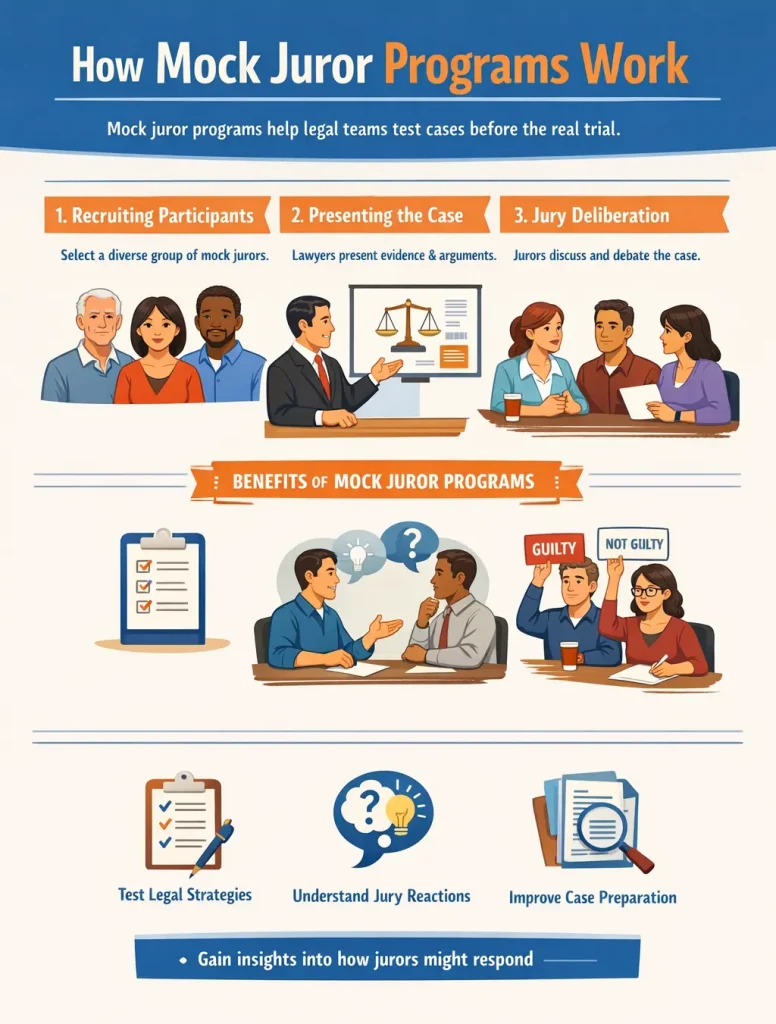
At first glance, the concept of getting paid to be a mock juror might feel mysterious. Many people imagine it involves sitting in a courtroom or spending hours in legal discussions. In reality, most mock juror programs are surprisingly straightforward and designed to be accessible to everyday people. The entire system revolves around helping attorneys test their legal arguments before presenting them in real court.
Mock juror programs typically connect law firms with members of the public who are willing to review case materials and share honest opinions. Lawyers upload summaries of real cases, evidence highlights, witness descriptions, or sometimes video presentations. Participants then read or watch the information and answer questions about their reactions. These questions often resemble the kind of deliberations that take place in a real jury room.
For example, a mock juror might be asked whether they believe the defendant is responsible for an accident, whether a witness seems credible, or how much compensation should be awarded to the plaintiff. The answers help attorneys understand how potential jurors interpret their arguments. This insight is incredibly valuable because it allows lawyers to refine their strategy before facing a real jury.
Many programs operate through secure online platforms, which means participants can complete assignments from their laptops or smartphones. Instead of traveling to a law office, you simply log in, review the case materials, and submit your verdict and feedback. Some sessions take as little as 20 minutes, while more complex cases may require an hour or more of careful reading and evaluation.
Payments vary depending on the complexity of the task. Short online verdict surveys may pay around $10 to $30, while more detailed mock jury simulations can pay $50 to $150 or more. In-person mock trials, when available, often pay even higher because they require a full day of participation.
The process is not designed to test legal expertise. In fact, lawyers prefer participants with no formal legal background because they want authentic reactions from average citizens. What matters most is your ability to read the information carefully, think critically, and provide honest feedback.
For people who enjoy analyzing situations, forming opinions, and seeing how legal arguments unfold, mock juror programs provide a fascinating glimpse into the legal world. Instead of watching courtroom dramas on television, you get to participate in the decision-making process that shapes real legal strategies.
The Process of Participating in a Mock Trial
Participating in a mock trial follows a structured but simple process designed to simulate how real juries evaluate cases. Once you sign up on a mock juror platform and complete your profile, you may begin receiving invitations whenever a case matches your demographic information. Lawyers often look for specific age groups, professions, or geographic locations because they want their mock jury to resemble the type of jurors likely to appear in the actual trial.
The first step usually involves reviewing the case materials. These materials can include written summaries, timelines of events, photographs, witness statements, or short videos explaining the legal dispute. Unlike a real courtroom trial that may last days or weeks, mock juror presentations are typically condensed into manageable segments that focus on the most important details.
After reviewing the information, participants answer a series of structured questions. These questions are designed to reveal how persuasive each side’s argument is. You might be asked whether the plaintiff proved their claim, whether the defendant appears negligent, or how trustworthy a witness seems. Sometimes mock jurors must choose a verdict, while other times they simply provide feedback on specific arguments.
In certain mock trials, participants also provide written explanations for their decisions. This step is extremely valuable for attorneys because it reveals the reasoning behind juror opinions. For example, if several participants mention that a particular piece of evidence was confusing, lawyers may realize they need to clarify that point during the real trial.
Some advanced mock trials even include virtual deliberation sessions. In these cases, participants join a video discussion where they debate the case with other mock jurors. The goal is to replicate the group dynamics that occur in a real jury room, where people influence each other’s perspectives while reaching a final verdict.
Once the session ends, participants submit their responses and receive payment through digital methods such as PayPal or direct transfer. The entire process is designed to be simple and efficient, allowing lawyers to collect feedback quickly while giving participants a flexible way to earn money.
For many people, the most interesting part of the experience is realizing how complex and strategic legal arguments can be. By participating in mock trials, you gain a deeper appreciation for how attorneys craft persuasive narratives and anticipate the reactions of jurors.
The Best Platforms to Find Mock Juror Jobs (Online and In-Person)
Here are some of the best platforms that pay mock jurors to participate in legal cases.
1. eJury
| Pay Range | $5 – $10 per case |
| Payment Method | PayPal |
| Requirements | – Be at least 18 years of age. – Be a citizen of the United States. – Be of sound mind and good moral character. – Be able to read and write. – Have never been convicted of a felony. – Not be under indictment or other legal accusation of misdemeanor theft, felony theft, or any felony charge. |
| Format | Online and Focus Groups |
eJury has revolutionized the way attorneys prepare for trial. It has been operating since 1999, making it one of the oldest players in the mock trial industry.
It’s an online platform that allows attorneys to conduct mock trials and focus groups before submitting their cases to a real courtroom. On the other hand, participants can sign up to be “eJurors” and get paid to review cases from their home computers.
As an eJuror, you read the facts of a case, review the evidence presented by both sides, and then answer a series of verdict questions. Your payment typically ranges from $5 to $10 per case, depending on the length and complexity.
2. OnlineVerdict
| Pay Range | Online Case Reviews ($30-$60), Virtual Mock Trials ($75-$700), In-Person Mock Trials ($200-$700) |
| Payment Method | Check by Mail, Venmo, Zelle, or PayPal (in special circumstances) |
| Requirements | – Must be a U.S. citizen. – Be over the age of 18. – Live in the venue in which the case is being tried. – No felony convictions or current indictments. – Can not be an attorney, paralegal, or legal assistant. |
| Format | Online Review, Virtual Mock Trial, and In-Person Mock Trial |
OnlineVerdict is another legal research platform that has been operating since 2004. It connects attorneys with “mock jurors” to test their cases before they ever reach a courtroom—essentially a virtual focus group for the legal industry.
As a juror, you will get paid to review case summaries and provide your honest opinion on the evidence and arguments. It’s the highest-paying mock juror platform.
Whenever a lawyer posts a case in your local county or federal district that aligns with your demographic details, you’ll receive an email invitation letting you know you’re eligible to join.
If you don’t meet the criteria, you can’t join the mock trial. It’s not a full-time job. You’ll only be invited when there is a case posted in your area.
3. First Court
| Pay Range | $150 to $350 for a full day |
| Payment Method | Check by Mail or Direct Deposit |
| Requirements | – At least 18 years old. – Must be a U.S. citizen. – No felony convictions. – You must live in the specific county or “venue” where the actual case is scheduled to be tried. |
| Format | Online and In-Person |
First Court is a legal consulting firm that conducts mock trials and focus groups. It recruits jurors via the PrivateJury.com website.
It allows attorneys to test their legal arguments, evidence, and witness testimony to a panel of “surrogate” jurors before they go to a real trial.
Getting started is simple—you sign up on their website and fill out a short profile with basic information like your age, where you live, and what you do for work.
If a study is being conducted in your area, a recruiter might reach out to you for a quick phone call to see if you’re a good match for that particular research project. You’re selected based on how your profile fits the specific needs of the case.
4. JuryTest
| Pay Range | $5-$50 per case |
| Payment Method | Check or PayPal |
| Requirements | – At least 18 years old. – Must be a U.S. citizen. – No felony convictions. – Can not be a lawyer, paralegal, or work for an insurance company. |
| Format | Online Survey, Voice Recording, or Video |
As the name suggests, JuryTest is an online platform that helps attorneys to conduct mock trials and focus group services to test their legal strategies, arguments, and evidence before going to a real court.
To become a juror, you register on the website by providing demographic information such as your age, location, gender, and occupation. When a case matches your profile, you receive an email notification—often referred to as an “e-juror summons.”
Being a juror, your job involves:
- Listening to or watching presentations
- Viewing exhibits
- Comparing sides
Once you’ve gone through all the materials, the next step is filling out a detailed questionnaire where you’ll share your thoughts and perspectives on things like:
- The persuasiveness of the arguments.
- The credibility of the witnesses or evidence.
- How you would rule if you were on a real jury.
- The amount of damages (money) you would award, if any.
5. GT Research
| Pay Range | $150 per day for specialty demographics, $135 per day for standard groups, and shorter sessions pay a minimum of $20 per hour |
| Payment Method | PayPal, Venmo, or Check |
| Requirements | – Understand English, speak English clearly – Have a reliable internet connection and a computer or tablet with a camera and microphone. – Have a quiet and private location to participate with no distractions. |
| Format | Zoom Video |
GT Research is a legal consulting firm that was formed by Guy Thiessen. He has 30+ years of experience in the legal industry and has been conducting focus groups for over 25 years.
It allows attorneys to conduct “mock trials” and focus groups to test their cases before they go to a real court. As a juror, you get paid for your opinions on legal disputes from the comfort of your home.
It runs all sessions via the Zoom Video platform. No homework or preparation required. All you need to do is attend the Zoom video call.
6. Resolution Research
| Pay Range | $5 to $400, depending on the length |
| Payment Method | Varies |
| Requirements | – Complete your profile with demographic information. |
| Format | Online Panel |
Resolution Research is a market research firm that specializes in mock jury recruitment. It offers various panels to conduct diverse studies.
To be a mock juror, sign up to PaidStudies.com. Fill out the form and wait for invitations.
When preparing for a case, lawyers often look for mock jurors who closely reflect the real audience they’ll face in court—people with similar backgrounds in terms of age, education, income, and where they live.
Before getting selected, you’ll typically go through a quick screening process—often a phone call or an online survey—to make sure there are no conflicts of interest. For example, they’ll check that you don’t personally know anyone involved in the case or have a professional background, like being a lawyer, that could influence your perspective.
If your background aligns with what the legal team is looking for in that particular study, you may be selected and invited to take part.
7. Legal Focus Group
| Pay Range | $15 to $20 per hour |
| Payment Method | PayPal, Venmo, or Zelle |
| Requirements | – A stable internet connection. – A device with a working video camera and microphone. |
| Format | Online |
Legal Focus Group is a platform that conducts focus groups for trial lawyers to test legal arguments and evidence before a case goes to trial.
For those taking part as jurors, the platform offers a flexible, work-from-home opportunity where you can earn money by sharing your opinions on real legal cases.
To get started, you’ll fill out a quick introductory questionnaire on their website to join their participant network. Since these trials are tied to specific locations, they usually look for people who live in the same city or state where the case is taking place.
8. Jury Solutions
| Pay Range | $20 per hour or $160 for a full day’s work |
| Payment Method | Check/Electronic Payment |
| Requirements | – Must be 18 years of age or older. – Must be a U.S. citizen. – Must be able to read and write in English. – Must live in the specific jurisdiction where the case is being tried. – Must not be a practicing lawyer or legal professional. |
| Format | Online and In-Person |
Jury Solutions is another mock trial program that helps lawyers to test their legal arguments before a real trial begins. You can work here as a mock juror to make extra money.
You can get started by heading over to their website and signing up for their “mock juror database.” During the process, you’ll typically be asked to share some basic details—like your age, job, and location—so they can match you with cases that are relevant to your area.
Participation depends on where you live. Since real trials take place in specific cities or counties, you’ll only be contacted when a case is being researched in your local area. Because of that, it’s completely normal if you don’t hear from them right away—or very often.
Comparison of Mock Juror Platforms
| Platform | Pay Range | Format | Who It’s For |
|---|---|---|---|
| eJury | $5 – $10 per case | Online and Focus Groups | Beginners / Side Hustlers |
| OnlineVerdict | Online Case Reviews ($30-$60), Virtual Mock Trials ($75-$700), In-Person Mock Trials ($200-$700) | Online Review, Virtual Mock Trial, and In-Person Mock Trial | Serious Participants |
| First Court | $150 to $350 for a full day | Online and In-Person | High-Commitment Users |
| JuryTest | $5-$50 per case | Online Survey, Voice Recording, or Video | Casual Users |
| GT Research | $150 per day for specialty demographics, $135 per day for standard groups, and shorter sessions pay a minimum of $20 per hour | Zoom Video | Scheduled Participants |
| Resolution Research | $5 to $400, depending on the length | Online Panel | Mixed Research Participants |
| Legal Focus Group | $15 to $20 per hour | Online | Flexibility |
| Jury Solutions | $20 per hour or $160 for a full day’s work | Online and In-Person | Regular Participants |
How to Increase Your Chances of Being Selected
Because mock jury assignments are not always available daily, many participants wonder how they can increase their chances of being selected when opportunities arise. While some factors—such as demographic targeting—are beyond your control, several strategies can help you receive more invitations and secure more assignments over time.
- One of the most effective strategies is joining multiple mock juror platforms. Each platform works with different law firms and legal research companies. If you only register with one website, you may miss opportunities posted elsewhere. By signing up for several reputable platforms, you expand your access to a wider range of cases.
- Another helpful tactic is responding quickly to invitations. Many assignments have limited spots available because lawyers only need feedback from a specific number of participants. When an email notification arrives, logging in promptly and accepting the assignment can make the difference between securing the opportunity or missing it entirely.
- Providing high-quality responses also plays a major role in future selection. Platforms often track how participants answer questions and whether their feedback is thoughtful and detailed. Jurors who consistently provide meaningful explanations tend to stand out. Over time, this can lead to invitations for more advanced studies or focus groups that offer higher pay.
- Maintaining an updated profile is another simple but important step. Life circumstances change—people move, change careers, or gain new experiences. Keeping your profile current ensures that lawyers searching for specific demographics can find you more easily.
Some participants also benefit from checking platform dashboards regularly, even if they haven’t received an email notification. Occasionally, new cases appear on the website before email alerts are sent to all members.
While you can’t control when lawyers need mock jurors, these small habits can significantly improve your chances of being selected. Over time, the combination of quick responses, detailed feedback, and active participation can lead to a steady flow of occasional assignments that provide extra income and interesting insights into the legal world.
How Much Money Can You Make as a Mock Juror?
One of the most common questions people ask when they first hear about this side hustle is simple: how much can you actually earn as a mock juror? The answer depends on several factors, including the platform you use, the complexity of the case, and the amount of time required to complete the task.
While it’s not a replacement for a full-time salary, mock juror work can provide a surprisingly decent stream of extra income for those who participate regularly.
Most online mock jury assignments fall within a predictable pay range. Shorter case reviews or verdict surveys typically pay around $10 to $30 and take approximately 20 to 40 minutes to complete. These are the most common assignments on many platforms because lawyers often need quick feedback about specific elements of a case.
For instance, they may want to know whether a witness appears credible or whether jurors understand a particular piece of evidence.
More detailed mock jury sessions can pay significantly more. Some assignments require participants to carefully analyze case materials, review multiple arguments, and write longer responses explaining their reasoning. These tasks may take an hour or more, but often pay $50 to $100 per session. In certain situations—especially when lawyers conduct comprehensive mock trials—participants can earn $150 or even $300 for a single session.
In-person mock trials usually offer the highest compensation because they require participants to travel and dedicate an entire day to the process. These events often pay $200 to $500 per day, depending on the law firm and the complexity of the case. However, such opportunities are less common than online assignments and are typically limited to specific cities where legal research firms operate.
It’s important to keep expectations realistic. Mock juror work is generally occasional rather than consistent. You might receive several invitations in one month and none in the next. Lawyers often seek participants with specific demographic profiles that resemble the population of the trial location, so availability depends on whether your profile matches their criteria.
When approached as a side hustle rather than a primary income source, mock jury work can be a rewarding way to earn extra cash while gaining insight into how courtroom strategies are built and tested.
Below is a general overview of common mock juror opportunities and typical earnings:
| Type of Mock Jury Task | Typical Time Required | Average Pay |
|---|---|---|
| Quick online verdict survey | 15–30 minutes | $10–$25 |
| Online case review | 30–60 minutes | $20–$60 |
| Detailed case evaluation | 1–2 hours | $50–$150 |
| Virtual mock jury discussion | 2–3 hours | $100–$200 |
| In-person mock trial | Full day | $200–$500 |
These figures highlight why many people see mock juror work as a valuable supplemental income stream. Completing just a few assignments each month could add an extra $100 or more to your earnings without requiring specialized skills or long-term commitments.
Pros and Cons of Working as a Mock Juror
Like any side hustle, becoming a mock juror comes with both advantages and limitations. Understanding these factors can help you decide whether this opportunity fits your lifestyle and expectations.
Pros:
- Unlike regular market research, mock jury work can be pretty rewarding. Online sessions usually pay between $20 and $60 an hour, while full-day in-person focus groups can earn you anywhere from $150 to $500.
- The feedback you share can actually shape how a lawyer approaches a case—or even impact the outcome of a settlement. Think of yourself as giving the legal team a helpful reality check.
- You don’t need to be a legal expert. In fact, lawyers actually look for everyday people—just regular members of the community who reflect the local neighborhood.
Cons:
- Keep in mind, this isn’t a steady way to make money. One week, you might get picked for three cases, and the next six months could go by without a single opportunity. Plus, recruiters are usually searching for very specific types of participants.
- In-person sessions can feel like a marathon. You might spend 8 to 10 hours in a conference room with only a few short breaks, as the legal team races to cover a huge amount of material.
- Before you can even get started, you often have to complete long ‘screener’ surveys for each opportunity. Sometimes you’ll spend 15 minutes answering questions, only to find out you don’t fit the demographic they’re looking for.
Tips for Avoiding Scam Jury Sites
As with many online income opportunities, the mock juror industry has attracted a few misleading or fraudulent websites. While legitimate platforms exist, it’s important to recognize the warning signs of scams before sharing personal information or investing time in questionable programs.
- One of the biggest red flags is any website that asks you to pay a registration fee. Authentic mock juror platforms never charge participants to join. Lawyers are paying for feedback, which means the platforms make money from law firms—not from the people providing opinions. If a website requires payment to access opportunities, it’s almost certainly not legitimate.
- Another warning sign involves unrealistic income claims. Some sites advertise promises like “earn $1,000 per week as a mock juror.” In reality, mock jury work is usually an occasional side gig rather than a full-time income stream. Platforms that exaggerate potential earnings are often trying to lure people into signing up for unrelated services.
- You should also look for transparent company information. Legitimate platforms typically provide clear details about the organization operating the website, including contact information and privacy policies. If a site lacks basic information about who runs it or how payments work, that’s a reason to proceed with caution.
- Checking online reviews can also help identify trustworthy platforms. Websites with long histories and positive feedback from participants are generally safer choices. Forums, freelance communities, and consumer review platforms often contain discussions from users who have actually completed assignments and received payment.
- Another good practice is to avoid sharing sensitive information unnecessarily. While demographic details may be required for jury selection purposes, reputable platforms will not request things like bank passwords, social security numbers, or large amounts of personal data during registration.
Before signing up, it’s worth spending a few minutes to make sure the platform is legit—it can save you from wasting your time or putting your privacy at risk. Stick with well-known mock juror websites, and be cautious of any that ask for upfront fees or promise earnings that sound too good to be true.
By choosing wisely, you can confidently explore this unique (and legitimate) way to earn some extra cash while taking part in real legal research.
Is Being a Mock Juror Worth It?
The thought of getting paid to review legal cases might sound a little out there at first. But for decades, lawyers have relied on mock jury programs to test their arguments before stepping into the courtroom. For everyday participants, it’s not just a fascinating peek behind the scenes of the legal world—it’s also a chance to earn some extra cash while seeing the justice system from a whole new angle.
The value of mock juror work depends largely on your expectations. If you’re searching for a full-time online career, this opportunity will probably fall short. Assignments appear only when law firms need feedback, and availability can vary widely. However, if you view it as a flexible side activity, the experience can be surprisingly rewarding.
One of the biggest reasons people enjoy mock juror work is the insight it provides into real legal disputes. Instead of watching courtroom dramas on television, you’re analyzing actual case arguments and deciding how you would rule if you were sitting in a jury box. This behind-the-scenes perspective can make the legal system feel much more understandable and relatable.
Another appealing aspect is the lack of strict commitments. You don’t need to work a certain number of hours or complete assignments every week. When opportunities appear, you can choose whether to participate based on your schedule and interest.
For individuals who enjoy critical thinking, reading, and forming well-reasoned opinions, mock juror work can feel both educational and financially rewarding. Even occasional assignments can add a bit of extra income while providing an engaging mental challenge.
FAQs
Can anyone become a mock juror?
Most platforms require participants to be at least 18 years old and legally eligible for jury duty in their country. As long as you have internet access and can read case materials carefully, you can usually participate.
How often do mock juror opportunities appear?
Opportunities pop up whenever law firms are looking for feedback, so they’re not always consistent. Some people might get several assignments in a month, while others receive fewer invites—it often depends on their background and profile.
Do mock jurors need legal knowledge?
You don’t need any legal background to get started. In fact, lawyers often prefer hearing from everyday people—they’re looking for honest reactions that reflect how real jurors would think and feel.
How do mock jurors get paid?
Most platforms send your earnings digitally—think PayPal or direct bank transfer—while some still offer mailed checks. Payments are usually processed once your assignments are completed and approved.
Is mock juror work legitimate?
Yes, many legal research companies use mock juries as part of trial preparation. However, participants should only sign up with reputable platforms and avoid sites that charge registration fees or promise unrealistic earnings.
Is this the same as real jury duty?
No—this is entirely optional. Your “verdict” doesn’t carry any legal weight, and you’re not being summoned by a court. Think of it as a flexible opportunity—you’re free to accept or skip cases based on what works for your schedule.
Can I do this if I’m a lawyer or work in the legal field?
In most cases, the answer is no. Many platforms tend to screen out attorneys, paralegals, or anyone closely connected to the legal field. The goal is to keep the feedback as authentic as possible—coming from everyday people rather than legal insiders.
Is it a steady source of income?
Not really. It’s better to think of it as a little extra cash on the side rather than a steady income. Since cases depend on your location, you might get a few invitations in one month—and then not see another opportunity for several months.
Conclusion
Getting paid to be a mock juror might sound a little unusual, but it’s actually a legit way to make some extra money online. Law firms use mock juries to try out their case strategies, spot any weak points, and get a feel for how real jurors could respond in court. By taking part, everyday people get the chance to contribute in a small yet meaningful way to the legal process—all while earning a bit on the side.
Getting started as a mock juror is pretty straightforward. Once you sign up on trusted platforms and fill out your demographic profile, you’ll begin receiving invitations to review cases and share your opinions. The pay can vary depending on how detailed or complex the case is, but overall, many assignments offer fair compensation for the time you put in.
When you go into it with the right expectations and pair it with a few other side hustles, being a mock juror can turn into a surprisingly rewarding way to earn some extra cash—while also giving you a behind-the-scenes look at how legal cases are built before they ever reach the courtroom.
Recommended Articles: