


Wondering where to sell baked goods? Here is the ultimate guide for home bakers to sell baked goods online and at local spots.
If someone’s ever taken a bite of your cookies and said, “You should be selling these,” that’s more than just a compliment—it’s a business opportunity waiting to happen. Turning your baking into income isn’t just a side hobby anymore; it’s one of the easiest and most approachable ways to step into entrepreneurship.
Think about it—people turn to food for almost every occasion. From birthdays and weddings to office meetings and even those random weekday cravings, there’s always a reason (and a steady demand) for delicious baked treats.
One of the best things about this kind of business is how simple it is to start. You don’t need a fancy storefront or a big upfront investment to get going. Many successful bakers actually started right in their own kitchens—with nothing more than a mixer, an oven, and a few loyal customers who loved what they made.
Compared to most businesses, it’s surprisingly easy to break into. And what really makes it special is the strong emotional connection people have with baked goods. They’re tied to comfort, memories, and celebrations—making this business not just accessible, but incredibly rewarding too.
We can’t overlook the growing love for all things homemade. More and more, people are skipping mass-produced goods in favor of handcrafted, small-batch creations. Shoppers don’t mind spending a little extra when a product feels personal, authentic, and made with care—and that’s exactly where home bakers get to shine.
In this guide, I’ll walk you through everything you need to know about selling baked goods.
Table of Contents
Legal Requirements Before Selling Baked Goods
Before you jump into taking orders and sharing mouthwatering photos online, there’s one important reality to keep in mind: being a great baker isn’t enough to legally sell your treats. It might take some of the excitement out of the moment, but getting familiar with the legal side early on is what keeps you, your customers, and your business safe in the long run.
Think of it like building the base of a cake—if the foundation isn’t solid, everything you stack on top can fall apart pretty quickly.
Food laws can look a little different depending on where you live, but most regions have clear guidelines when it comes to selling homemade food. These rules aren’t there to make things difficult—they’re meant to keep your customers safe. After all, the last thing you want is for your brand to be associated with a foodborne illness, especially when you’re working hard to earn trust in your community.
The good news? In many places, it’s now much easier for home bakers to turn their passion into a small business thanks to something called “cottage food laws.” These rules are created with small-scale entrepreneurs in mind, letting you sell certain low-risk baked goods directly to customers—no commercial kitchen required. That said, there are still a few boundaries to keep in mind, like which products you’re allowed to sell, how much you can earn each year, and where you can legally offer your treats.
Cottage Food Laws Explained
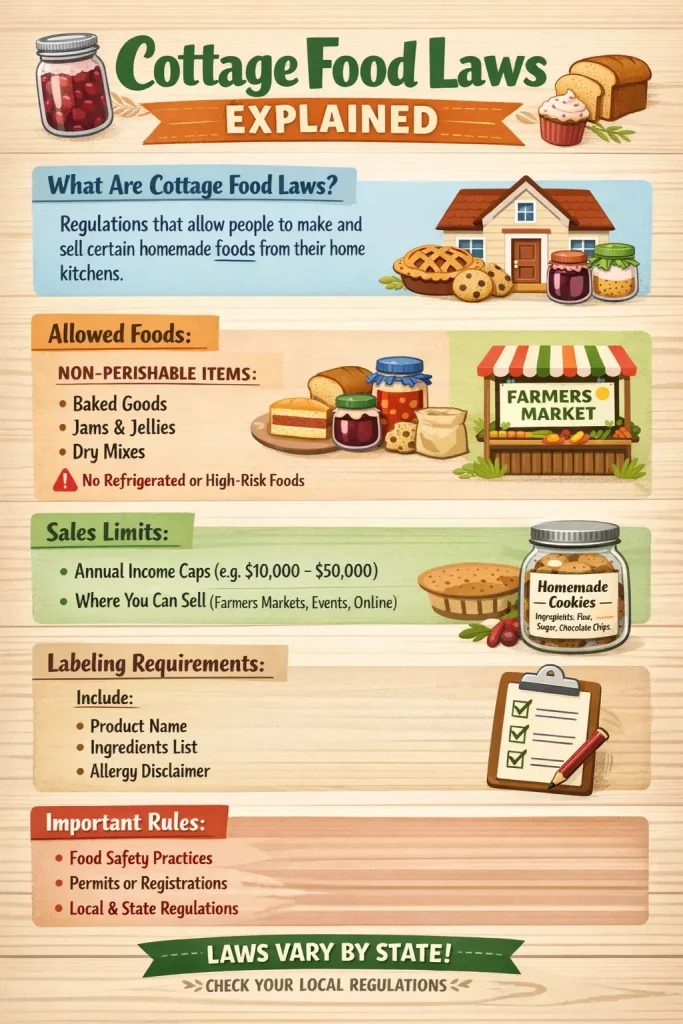
Cottage food laws are kind of like a dream come true for home bakers—but there’s a catch. They make it possible to bake and sell certain foods right from your own kitchen, without the hassle of renting a commercial space. Sounds pretty ideal, right? It definitely can be… as long as you follow the rules that come with it.
Cottage food laws usually focus on shelf-stable baked treats—think cookies, breads, plain cakes, muffins, and certain pastries. If it needs to be refrigerated, like cheesecakes, cream pies, or custards, it’s typically off-limits unless you move up to a licensed commercial kitchen. The logic is straightforward: perishable foods have a higher risk of spoiling and causing foodborne illnesses.
Another important factor to keep in mind is the sales limit. Many areas set a cap on how much you can make each year under cottage food laws. In the U.S., for example, some states let you earn anywhere from $10,000 to $50,000 annually. Once you go over that limit, it’s usually time to step up into a more formal, regulated business setup.
Labels really matter. Most of the time, you’ll need to make sure your packaging clearly shows certain key details, like:
- Your name or business name
- Ingredients list (in descending order by weight)
- Allergen warnings (like nuts, dairy, gluten)
- A statement indicating the product was made in a home kitchen not inspected by health authorities
Labeling can feel like a chore, but it’s more than just ticking a compliance box—it’s about being transparent. People love knowing exactly what’s in their food, especially those managing allergies or special diets.
Here’s a pro tip: before you start selling, take a minute to check your local cottage food laws. A simple online search or a quick call to your local health department can save you a ton of headaches down the road.
You can use a Cottage Foods Map from the Farm-To-Consumer Legal Defence Fund to check rules and regulations in your state.
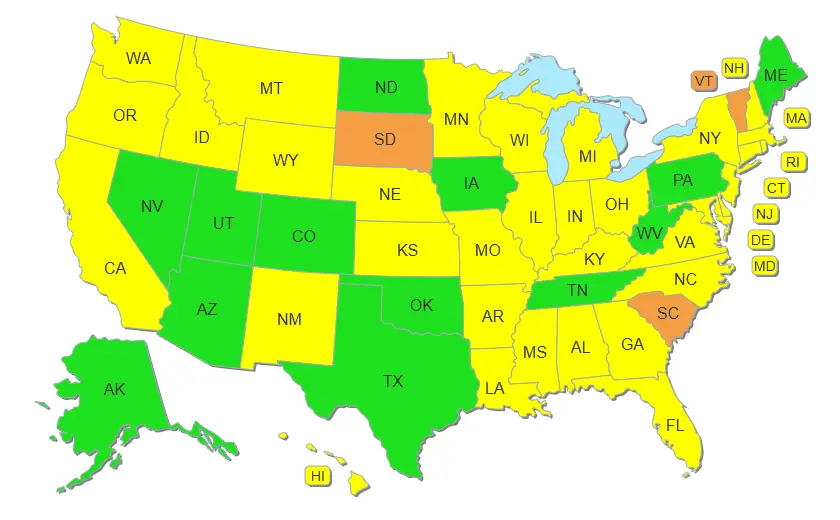
While analyzing cottage food laws in your state, look out for key aspects like:
- Permitted Foods: Usually, this includes only foods that aren’t considered risky and don’t need to be refrigerated—think bread, cookies, jams, jellies, and candies.
- Sales Limits: In many states, there’s a cap on how much you can earn in total sales each year—anywhere from around $25,000 to over $250,000, depending on where you are.
- Labeling Requirements: Most products need to clearly show the maker’s name and address, list all the ingredients, and include a note letting customers know the food was prepared in a kitchen that hasn’t been officially inspected.
- Sales Locations: You can sell directly to customers—think farmers markets, from home, or at local events—but selling in stores or shipping across state lines usually comes with more restrictions.
If you’re selling baked goods from home, these are the essential points of cottage food laws you’ll want to understand.
Where To Sell Baked Goods Near Me
When it comes to selling baked goods, there is no better option than local spots. It allows you to start small and build loyal customers.
Here are some of the best places to sell baked goods near you.
1. Farmer’s Market
Farmer’s markets are one of the best places to sell baked goods, especially if your brand aligns with fresh, local, and handmade products. People who visit these markets are already in the mindset to support small businesses, which makes them ideal customers.
Your booth setup matters more than you might think. A clean, inviting display with clear signage can make a huge difference. Think of your table as your storefront—it should reflect your brand. Use simple elements like baskets, trays, or stands to create visual interest and make your products easy to browse.
Pricing at markets can be tricky. You want to remain competitive while still making a profit. Observing other vendors can give you a sense of what customers are willing to pay, but don’t fall into the trap of underpricing to compete.
Pros:
- Compared to opening a bakery, a market booth is incredibly cheap.
- You get real-time feedback from customers.
- You get paid on the spot for your sales.
- Build trust with local customers to ensure repetitive sales.
Cons:
- You have to pay a fee to set up a booth.
- Physical labor to haul tables, tents, weights, and set up the booth.
- Bad weather can instantly kill your foot traffic.
Pro Tip: You can offer a sample of your baked goods so that customers can make mouthwatering buys.
2. Local Cafés and Coffee Shops
Cafés and coffee shops are a perfect match for baked goods. After all, coffee and pastries belong together—it’s practically a daily ritual for many people. That’s exactly why so many small cafés are happy to partner with local bakers instead of making everything from scratch in-house.
When reaching out to a café, skip the hard sell at the door. Instead, show up with samples—your very best creations. Let your baked goods do the talking. If your banana bread or cookies truly impress, you’ve already done half the work without saying a word.
Be prepared to discuss pricing and supply terms. Most cafés operate on either:
- Wholesale pricing (they buy from you at a lower price and resell at a markup)
- Consignment (you get paid only when your items sell)
When it comes to selling your products, wholesale tends to offer more stability and a more predictable income. Consignment, on the other hand, can feel a bit uncertain—but it’s often easier to break into, especially when you’re just starting. Whichever route you choose, calculate your costs carefully to ensure you’re still making a profit.
Pros:
- Unlike individual customers who buy sporadically, a cafe provides a predictable, recurring order.
- The cafe handles the retail work of dealing with the end consumer.
- Low upfront costs.
Cons:
- Cafés typically expect a wholesale discount of 30% to 50% off the retail price so they can make their own margin.
- Most cafes will require you to have Product Liability Insurance.
3. Grocery Stores and Boutiques
Getting your baked goods into local grocery stores or specialty boutiques is another powerful way to expand your reach. Unlike cafés, these businesses often focus on packaged, shelf-stable items, which means your products need to look as good as they taste.
Presentation becomes everything here. Your packaging should be clean, labeled properly, and visually appealing. A clear ingredient list, branding, and maybe even a small story about your business can make your product stand out on the shelf.
Smaller, independent grocery stores are usually more open to working with local vendors compared to large chains. They often pride themselves on supporting local businesses, which works in your favor.
Shelf life is a big factor. Stores don’t want products that spoil quickly, so focus on items like cookies, brownies, biscotti, or packaged pastries that can last a few days without losing quality.
Pros:
- You can sell high-volume baked goods. It means a high profit margin.
- Grocery stores and boutiques have many customers. Therefore, there will be consistent orders.
Cons:
- Stores will cut the commission fee.
- You’ll need professional packaging, nutritional labels, barcodes (UPCs), and often specific liability insurance.
4. Pop-Up Shops and Seasonal Events
Pop-up shops are essentially short-term retail spaces, but they can be a powerful way to test out new products or explore fresh markets. Unlike a basic market stall, they let you build a more engaging and immersive brand experience that really connects with customers.
You could also team up with a nearby business—like a cozy boutique or a popular café—to host a pop-up event. It’s a smart way to cut down on costs while getting your products in front of people who are already there and ready to explore. When done right, it’s a win for both sides and a great way to grow your reach organically.
Seasonal events are another goldmine. Think holidays like Christmas, Valentine’s Day, Halloween, or even local festivals. During these times, people are actively looking for themed treats and gifts. A box of heart-shaped cookies in February or spooky cupcakes in October practically sells itself.
The key to success in pop-ups and events is planning. You need to anticipate demand, prepare enough inventory, and ensure your presentation matches the occasion. Running out of products early might seem like a good problem, but it also means missed sales opportunities.
You can use Eventbrite to explore events.
Pros:
- Low upfront costs. You only pay for the space when you’re actually selling.
- Direct feedback from customers.
- Seasonal events attract a massive audience. You can hand out your business cards to drive people to your social media or website for future custom orders.
Cons:
- Bad weather can lock out your potential customers indoors.
- Physical labor to set up everything.
5. Corporate Offices
Corporate offices and workplaces can be a great way to boost your baked goods sales—especially when it comes to crowd-pleasers like breakfast pastries, snack bars, and dessert trays.
A simple way to get started is by connecting with nearby businesses, office buildings, or coworking spaces. Reach out to see if they’re open to catering orders or even setting up a regular weekly delivery. It’s a win-win: they get fresh, delicious treats, and you gain a steady stream of customers.
Pros:
- You will get bulk orders from office workers.
- Offices love routine. You’ll get recurring orders.
- If office workers love your baked goods, they will order them personally for birthdays, holidays, or weddings.
Cons:
- You must maintain a strict delivery schedule.
- Corporations often operate on Net-30 or Net-60 payment terms.
- Most office buildings require vendors to have General Liability Insurance and specific health permits before you’re allowed past the security desk.
Where To Sell Baked Goods Online
If there’s one thing that has completely transformed how home bakers sell, it’s the internet. You’re no longer limited to your neighborhood or local events—your customer base can stretch across cities, even countries, depending on what you’re selling.
Here are some of the best places to sell baked goods online.
6. Etsy
Etsy is known for selling handmade and vintage items. Did you know that you could sell food items?
Etsy has become a go-to platform for handmade and artisanal products, and baked goods fit right into that ecosystem—especially items that can be shipped safely. If your products have a unique twist, like decorated cookies, themed gift boxes, or specialty diets (gluten-free, vegan), Etsy can be a goldmine.
What makes Etsy powerful is its built-in audience. People go there specifically looking for handmade, unique, and personalized items. You’re not trying to convince them to buy—you’re meeting them where they already want to shop. That’s a huge advantage compared to building a website from scratch and hoping people find it.
Etsy lets you sell baked goods as long as you follow local food laws. You can sell non-perishable items like cookies and brownies.
There are fees to consider. Etsy charges listing, transaction, and payment processing fees. While they’re relatively small, they add up, so you need to factor them into your pricing.
Pros:
- It has a built-in customer waiting for your mouthwatering baked goods.
- It handles the storefront, payment processing, and basic SEO tools.
- Baked goods (like cookies, brownies, and DIY kits) are high-performers in the “Gift” category.
Cons:
- Etsy fees can slim your profit margin.
- You must comply with Cottage Food Laws.
7. Social Media (Facebook, TikTok, Instagram, Pinterest)
If Etsy is like a marketplace, social media is like your personal storefront—and your marketing engine at the same time. Platforms like Instagram, TikTok, and Facebook have become essential tools for home bakers, not just for selling but for building a brand.
Think about it: how many times have you seen a viral baking video and immediately craved what you saw? That’s the power of visual content. A short clip of icing being piped onto cupcakes or a knife slicing through a soft cake can trigger instant desire. It’s not just content—it’s persuasion.
Instagram works well for curated, high-quality photos and reels. TikTok thrives on short, engaging, and sometimes messy behind-the-scenes videos. Facebook is great for local communities and groups where people actively look for home-based businesses. Each platform has its strengths, and you don’t need to master all of them at once.
Taking orders through social media can be as simple as direct messages when you’re starting. As demand grows, you can move to more structured systems, such as order forms or websites.
Pros:
- You can attract millions of customers to build your brand.
- You don’t need a website or a brick-and-mortar shop to start.
- There are no listing or selling fees.
Cons:
- Immense competition.
- Compliance with cottage food laws.
Pro Tip: Don’t rely solely on social media algorithms. They change constantly, and your reach can fluctuate. Use social media to attract customers, but try to build an email list or a loyal customer base that you can reach directly.
8. Delivery and Subscription Models
Here’s where things get interesting. Instead of relying on one-time purchases, you can create recurring revenue through delivery and subscription models. It’s like turning your baking business into a service, not just a product.
People love convenience. If they can get fresh-baked goods delivered to their doorstep without thinking twice, many will happily sign up for it. That’s the psychology behind subscriptions—it removes the need to make repeated decisions.
This model also gives you predictability. Instead of guessing how many items to bake each week, you already know how many orders you have. That reduces waste and makes your workflow more efficient.
Weekly Treat Boxes and Subscription Services
Subscription boxes are one of the smartest ways to build a loyal customer base. Instead of selling individual items, you offer a curated experience—like a weekly or monthly box of assorted baked goods.
Think about how exciting it feels to receive a package you didn’t have to order that day. That anticipation is part of the appeal. You’re not just selling cookies—you’re selling a moment of joy.
You can get creative with themes:
- Seasonal flavors
- Holiday specials
- “Baker’s choice” surprise boxes
- Diet-specific boxes (vegan, gluten-free, etc.)
Pricing should reflect the value and convenience. Customers are usually willing to pay a bit more for subscriptions because of the experience and consistency.
9. Set Up a Shopify Store
If you want to grow your baked goods business, having a website or storefront is vital.
Do you think setting up an online storefront is overwhelming? Not anymore.
Shopify makes setting up an online storefront a piece of cake. It lets you control everything. You can even attach a custom domain name, giving your website more authority (i.e., yourbakery.com).
Customers can easily explore your products online, personalize their cakes just the way they like, select a convenient pickup time, and complete their payment—all in one smooth process. Once the order is placed, Shopify automatically sends a confirmation email to the customer while notifying your bakery of all the order details, so everything stays organized and hassle-free.
Shopify offers a free trial for new customers and then $1/mo for three months.
Pros:
- Unlike Etsy or Facebook, you own the “look and feel” of your store.
- It has excellent native tools (and specialized apps like Stellar or Zapiet) that allow you to set specific local delivery zones, pickup time slots, and “cutoff times.”
- If you also sell at pop-ups or markets, Shopify’s Point of Sale (POS) system syncs your in-person sales with your online inventory.
- You can create “Cake & Cookie Bundles” or “Monthly Treat Subscriptions,” which significantly increases your Average Order Value (AOV).
Cons:
- There are no built-in customers. You have to drive traffic to your storefront.
- You have to pay a monthly fee even if you don’t sell anything.
Pricing Strategies for Baked Goods
Pricing is where many bakers struggle—not because they can’t do the math, but because they underestimate their own value. It’s easy to look at competitors and feel like you need to charge less to attract customers. But that mindset often leads to burnout and minimal profit.
Pricing isn’t just about covering costs—it’s about positioning your brand. Low prices can sometimes signal low quality, while fair, confident pricing reflects professionalism.
Calculating Costs and Profit Margins
Start with the basics: calculate the cost of ingredients for each item. Then add packaging, utilities, and any additional expenses. Don’t forget your time—your labor is part of the cost.
Here’s a simple breakdown:
| Cost Component | Example |
|---|---|
| Ingredients | $5 |
| Packaging | $2 |
| Overhead | $3 |
| Total Cost | $10 |
From there, apply a markup to ensure profit. Many bakers aim for at least a 50–70% profit margin, depending on their market.
Tracking your numbers might feel tedious, but it gives you clarity. You’ll know exactly which products are worth your time and which ones aren’t.
Competitive Pricing Without Undervaluing
Looking at competitors is helpful—but it shouldn’t dictate your pricing entirely. Your products, branding, and customer experience all play a role in what you can charge.
If your packaging is premium, your flavors are unique, and your presentation is top-notch, you can justify higher prices. The key is to make sure customers see that value.
Avoid the trap of competing solely on price. It’s a race to the bottom, and it’s hard to win. Instead, focus on differentiation. What makes your baked goods special? Lean into that.
Marketing Your Baked Goods Business
You can bake the best cookies in the world, but if no one knows about them, it doesn’t matter. Marketing is what turns your skills into income.
1. Branding and Packaging Tips
Your brand is more than a logo—it’s how people feel when they interact with your products. Colors, fonts, packaging, and even your tone of voice all contribute to that experience.
Good packaging can elevate a simple product into something memorable. A neatly wrapped box with a handwritten note can leave a lasting impression.
2. Leveraging Word-of-Mouth and Reviews
Word-of-mouth is still one of the most powerful marketing tools. Happy customers will naturally recommend you—but you can encourage it by providing exceptional service and gently asking for reviews.
Online reviews, testimonials, and user-generated content build trust. People are more likely to buy when they see others enjoying your products.
FAQs
Here are some common questions asked by home bakers.
Can I sell baked goods from home legally?
Yes, cottage food laws made it possible for home bakers to sell baked goods. However, you must follow local regulations, labeling rules, and sales limits.
What baked goods sell the best?
Baked favorites like cookies, brownies, cupcakes, and fresh bread never go out of style—they’re simple to make and loved by just about everyone.
How do I price my baked goods?
Calculate all costs, including ingredients and labor, then apply a markup to ensure profit while staying competitive.
Do I need a license to sell baked goods online?
In most cases, yes. Requirements vary depending on your location and the type of products you sell. Therefore, check your local rules and regulations on the homemade baked goods business.
What is the most profitable way to sell baked goods?
Subscription boxes, wholesale partnerships, and direct-to-consumer sales often provide the highest and most consistent profits.
Final Thoughts
Selling baked goods offers more than just extra income—it’s a path to building something truly your own. From home kitchens to local cafés, online platforms to subscription boxes, the opportunities are everywhere if you approach them strategically. The key is to start where you are, stay consistent, and treat your passion like a real business.
What do you think about selling baked goods? Let me know in the comments.
Recommended Articles: